

Meaning of a TTS Scholarship: Interview with Kasper Laegring Nielsen

March 28, 2013 · Posted in Features, TTS Programs · Comment 

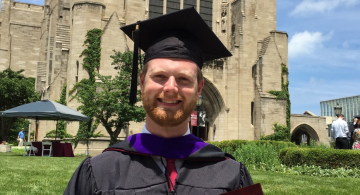
Kasper Lægring Nielsen is a 2012-2013 Thanks To Scandinavia Rebild Scholar from Copenhagen, Denmark, currently working towards a Doctorate in Philosophy of Architecture at University of Pennsylvania School of Design. He was an external Associate Professor of Art History at the University of Copenhagen, and has a Master of Arts in Art History. Among other accomplishments, he has published in the Nordic Journal of Architectural Research. In an interview with TTS board member Liv Grismby, Laegring relates the “special reasons” that make his Thanks To Scandinavia scholarship so meaningful – “three members of my family were active in the Danish Resistance during the German Occupation of Denmark from 1940-45.”

Read more

Uppsala historian Paul A. Levine awarded Raoul Wallenberg Foundation medal

February 27, 2013 · Posted in Features · Comment 

Interview by Liv Grimsby, TTS Board Member

Associate professor Paul A. Levine, historian and senior lecturer at Uppsala University, has been awarded the Raoul Wallenberg Centennial Medal commemorating the 100th anniversary of Raoul Wallenberg’s birth. Levine received the medal together with four others at a ceremony in Buenos Aires, Argentina, on 23 October, 2012.

Paul Levine has spent many of his research years on Raoul Wallenberg’s work in Budapest 1944 and is one of Sweden’s leading authorities on the Holocaust. In 2010 he published a detailed study of Wallenberg’s short time in Hungary, Raoul Wallenberg in Budapest: Myth, History and Holocaust, a study that was translated into Swedish in 2011.
Read more

Rebecca Neuwirth’s remarks

February 1, 2013 · Posted in Uncategorized · Comment 

January 24, 2013

Remarks at: “Rescue During the Holocaust: The Courage to Care – The Story of the Danish Jews.” A program hosted by the Department of Public Information, non-governmental organizations at the United Nations in observance of the International Day of Commemoration in Memory of the Victims of the Holocaust.

24_Jan_NeuwirthThank you Maria-Luisa Chavez, and appreciation to your dedicated colleages who arranged this event, to Gail and Mackenzie and others. The UN, with its Department of Public Information in the lead, has arranged public commemorations of the Holocaust since 2006 in New York. Your efforts have been important to Jews around the world and to many others.

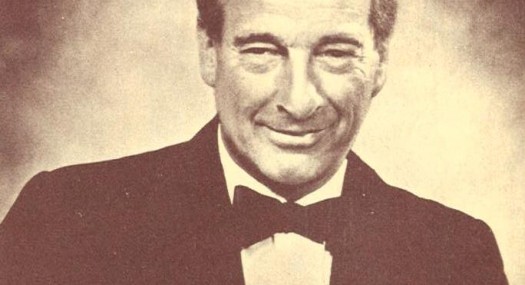
Thank you to those who took valuable time to be here, to the people working at the UN, to the NGOs who play a vital role in building a better society. I want to specially recognize my colleagues from the American Jewish Joint Distribution Committee, an organization that was deeply involved in rescue during the Second World War and in that takes care of Jews in need and others today. I also want to recognize Board members and Executive Director of Thanks To Scandinavia, and Rikke Borge, the daughter of the co-founder and Danish entertainer Victor Borge. Thanks To Scandinavia is dedicated to keeping alive this particular slice of history and working with a new generation to combat antisemitism and racisms of all kinds today.

Here is the story:

Nazi Germany invaded Denmark, it’s neighbor to the north, on April 9, 1940. After two hours of sporadic fighting, the Danish government – which felt it was no match for Nazi forces – surrendered.

Germany proceded to occupy Denmark. But its control of the territory was relatively lax, so different from the brutal reigns of terror that Nazis implemented in countries to its east. There was no major hunger in Denmark, no forced labor, no public massacres. Furthermore, Germany allowed the Danish government to retain sovereignty over most internal issues.

The Danish government made some concessions to its Nazi occupiers. It drew a line, however, at enacting discriminatory laws and actions against Denmark’s small Jewish minority. Most of the 7,500 Jews had lived in Denmark for generations and were well integrated into the society. The Nazis realized that forcing the issue would be highly unpopular and might threaten an otherwise unencumbered occupation.

The relationship between Denmark and Nazi Germany changed as the war continued and Germany’s initial successes started reversing in 1943. The Danish Resistence became more active and tensions flared. In August 1943, Germany dissolved the Danish government and proclaimed marshal law.

Immediately thereafter, Germany decided that the so-called “Jewish Question” in Denmark could no longer wait and hatched plans to deport the country’s Jews.

Small groups of police were to fan out to Jewish homes in a surprise action, arresting and deporting Jewish men, women and children. The evening was set for October 1, 1943, which was Rosh Hashanah, the Jewish new year, a holiday when Jewish families were sure to be at home together. Trains were waiting to deport the Jews to Nazi camps, and then to grueling labor and death. It was a Nazi plan not dissimilar to those that had resulted in the mass murder of millions of Jews in countries all over Nazi-controlled Europe.

But in Denmark, something went wrong with the plan. And something went right with human courage and ingenuity.

It was a German diplomat, Georg Ferdinand Duckwitz, who exercised one of the first and most important acts of courage. Duckwitz leaked the plan to the head of the Danish Social Democratic Party, who shared the news with the leader of the Danish Resistance and the Jewish community. Rabbi Marcus Melchior warned his congregants and word spread like wildfire.

Jews fled from their homes. Many sought refuge with neighbors, who were willing to hide them and bear the risk to their own families in order to help. Bispebjerg Hospital in Copenhagen disguised Jews as nurses and patients, and hid them in closets and basements. Other Jews hid in churches.

Thanks to the efforts of physicist Neils Bohr, Sweden agreed on October 2 that it would offer refuge to Danish Jews fleeing persecution.

Over the next weeks, Jews were hidden in trucks, buses taxis, and even, in a stroke of ironic humor and ingenuity, in hearses — and transported to coastal areas.

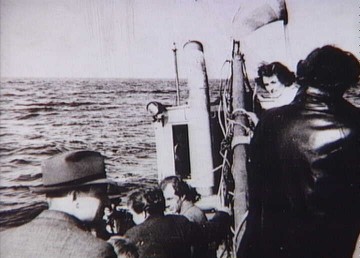
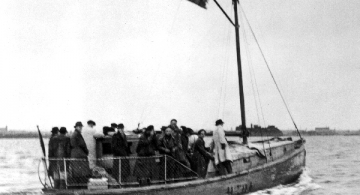
From there fishermen helped ferry over some 7,000 Jews and 600 family members to safety on Sweden’s shores. The action required hundreds of trips in small rowing and motor boats, most with a capacity of 12-14 people. German police caught some Jews, but many of them must have turned a blind eye – a small act of decency in its own right.

Some 500 Danish Jews did not flee or were caught – and they were sent to the Theresianstadt camp. The Danish Red Cross visited them and other Danish prisoners there, and many Danes sent packages. In part because of this attention and care, the overwhelming majority of Danish Jews in Theresienstadt survived the war.

And one other notable postscript: In Denmark, many of the Jews who returned found their properties, businesses, and even pets cared for by neighbors and friends and awaiting their return. This was so unlike the scene that greeted Jewish survivors in most other parts of Europe, where they found homes and goods pillaged and often antisemitism still rife.

To be sure, Denmark’s record was not a perfect one. The country could have taken in many more Jewish refugees than it did and saved countless more lives. There were Danes who sympathized with the Nazis and even volunteered to fight for Germany. And during the rescue, some Danes took advantage of the Jews’ desperation in order to enrich themselves, and some few betrayed Jews to Nazis.

Nevertheless, in a Europe full of darkness, hate and murder, the rescue of Danish Jews is a point of light. Or really, it represents many points of light – many individuals who chose to take risks, large and small, in order to help.

Why?

There were certainly historical realities at play – the lax occupation and the fact that the persecution of Jews came at a time when Nazi power was waning and therefore seemed beatable.

There were also cultural realities. Antisemitism was not common in Denmark before the war and Jews were considered fully part of Danish life. Even the Danish sense of humor, with its tendency to undercut authority of all kinds, might have inured Danes to the Nazi’s racist ideology.

It is worth contemplating these issues – but in the end, they merely describe the conditions that made the rescue possible.

In the final analysis, the rescue happened because thousands of individuals made active decisions to help the Jews and not to ignore them or to enable their persecutors.

If there is one idea that I’d like to convey, it is how easily the story of Danish Jews could have gone the other way and ended in mass murder rather than rescue. There is no doubt that the actions of specific individuals changed the course of history.

And one more thought: each act of bravery made a real difference. But together, they added up to more than the sum of their parts. With each act, the likelihood that others would join in the mass rescue action increased exponentially.

Just as mob psychology can bring an otherwise passive crowd to hateful and destructive behavior that the individuals in that crowd would never have been capable of on their own, so too we see in the Danish rescue that acts of decency and courage can create a sort of wave of goodness that in turn strengthens resolve, stimulates ingenuity and ultimately increases the chances that others will make the right choices and turn the tides to the good .

It’s an emboldening idea – then, and now.

Jacob Abudaram’s remarks

February 1, 2013 · Posted in Uncategorized · Comment 

January 24, 2013

Remarks at: “Rescue During the Holocaust: The Courage to Care – The Story of the Danish Jews.” A program hosted by the Department of Public Information, non-governmental organizations at the United Nations in observance of the International Day of Commemoration in Memory of the Victims of the Holocaust.

As a child, one often hears fairytales and legends of heroes who save the day despite all the odds being stacked up against them. The oppressive “bad guys” attempt to blot out all traces of good, but ultimately fail to do so.   When I learned about the Holocaust as a child, I learned of the death and destruction brought upon Europe and the Jewish people, as the Nazi regime destroyed millions upon millions of innocent lives.  European Jews were humiliated, deported, and murdered and acts of resistance were swiftly crushed by the Nazi demon.  But I heard nothing of the heroes of the Holocaust, that is, those who saved lives. When I was a participant on Kivunim, a gap-year program that examines the Jewry of Israel and the Diaspora, I was finally able to find these heroes in places unknown and stories untold.  Throughout Europe, courageous acts by Christians saved thousands of Jews, manufacturing hope in what was a dark time for the world.

It is the Danish Resistance and Danish populace that deserve recognition for their heroic acts.  In the face of the utmost danger, the Christian Danes risked absolutely everything to save their Jewish brethren and defy the Nazi occupation.  It would have been easier to do nothing.  It would have been easier to sit back and let the Nazi War Machine deport and exterminate the Jews.  But that is not what heroes do.  These heroes warned their Jewish counterparts and then successfully smuggled them to Sweden.  They were inspired by King Christian X of Denmark, who rode through the streets of his capital during the occupation unafraid of his invaders, instilling a sense of national confidence, independence, and resistance.  In fact, when Adolf Hitler asked the King to change his policy towards the Jewish problem, King Christian X responded, “We have no Jewish problem.  We have only Danes.” While 7-8,000 lives saved may be a small number in comparison to six million taken away, life is precious, and every saved life meant the world to someone and many more thousands in their children, grandchildren, and great grandchildren.  During those ten fateful nights in which the Danish Jews were shipped across the Øresund (Aw-Reh-Soont) strait, Denmark proved that humanistic values could shine through during a time where horrible atrocities were being perpetrated all around them.  They did not let religious differences interfere with their humanity. Denmark nationally refuted the Nazi occupation by allowing its democratic ethics and unprejudiced society to fight back against the evil through the salvation of the Jews.  Today, the Jewish community in Denmark thrives.  Six thousand Jews are integrated into society, making strong impacts in politics, art, and media.  Danish values of tolerance, openness, and respect of democratic principles still reign strongly throughout the country, creating the same feelings of equality and cohesiveness that Denmark has sustained for hundreds of years.

This is a remarkable story that very few know about.  Why is it that after thirteen years of Jewish education, I never knew about these brave heroes and the many others who fought against the oppressive Nazi war machine?  Why has the legacy of the Holocaust only been viewed as the paradigm of the strong against the weak and of a complete darkness enveloping Europe? My experiences on Kivunim with the Jews of the Diaspora gave me hope, and let me find the bright lights that fought against the vast and endless dark.  These heroes can be found throughout Europe.  People hid their Jewish neighbors in their attics, leaders refused to release the names of their Jews, and Jews mounted resistance in many different forms and places. The story of the Danish people’s resistance and the Danish underground, however, is the most widespread as it involved an entire nation making the collective choice to save their fellow countrymen.  I am of the strong opinion that stories like this, of the rescue of the Danish Jews, should go hand-in-hand with the stories of the atrocities that the Nazi Regime committed.  That the paradigm of study should be : the morally bankrupt against the morally noble. In this manner, not only do the deaths of the six million souls remain in our memories, but we can also use the stories of the morally good to inspire and teach ourselves and our children. The Danish people teach us the importance of maintaining our integrity, that it is in the face of adversity where it is most vital to uphold one’s morals, ethics, and principles.  When the Danes could have stood idly by, they chose to help even complete strangers in order to protect their high moral standards and defy the Nazi evil, just as we must challenge ourselves and our children to do the same. Such bravery by so many cannot be lost to the abyss of time.

We can also learn to channel the underlying principles behind the actions of the Danish people: religious and societal differences do not warrant animosity, humiliation, torture, or death. It is together that we as the human race must commit ourselves to the greater good and accept one another as fellow humans.  It was when the stakes were highest that King Christian X remained steadfast and kept his ground, inspiring his people and the Danish Resistance to stand tall in the face of danger.  I want to see more of that in this world. I fear that more people are becoming bystanders while injustice is committed before their eyes.  It is the type of person who says, “NO,” and does something about it that I strive and challenge US all to become. The story of Danish Jews has personal significance to me given my family’s Turkish-Jewish history. Since the Ottoman Empire, Turks have helped Jews during times of strife.  After the expulsion of Jews from Spain in 1492, the Ottoman Sultan sent ships to bring Jews to his empire where they lived freely to practice their religion.  During the Holocaust, Turkish diplomats in France fought for and saved thousands of Turkish Jews and provided them safe transport back to Turkey.  It is the example of the Turks and Danes that I want all of us to follow, that it is during our fellow man’s darkest of times that we must rise up to uphold our humanity.

Rescue During the Holocaust: The Courage to Care – the Story of the Danish Jews

January 31, 2013 · Posted in Features · Comment 

Written by Liv Grimsby, TTS Board Member 

“Rescue During the Holocaust: The courage to Care – the Story of the Danish Jews, ” an event organized by the UN DPI-NGO Relations in observance of the International Day of Commemoration in Memory of the Victims of the Holocaust

The International Day of Commemoration in Memory of the Victims of the Holocaust has been observed on January 27th each year since 2005, when the UN General Assembly designated this day to encourage awareness and remind the world of the threat posted when genocide and other crimes against humanity are allowed to occur. Over the past several briefing seasons, DPI/NGO Relations has observed the Day by paying tribute to the untold stories of the countless brave men and women who risked their lives to save Jews during the Holocaust.

Read more

Norway’s Anne Frank – A Jewish refugee in Norway

December 20, 2012 · Posted in Features · Comment 

Written by Liv Grismby, TTS Board Member

The publication of “Ruth Maier’s Diary” with the subtitle “A Jewish Refugee in Norway” (Gyldendal, 2007) represents a historical shift in the account of the Norwegian Jewish narrative. Ruth was 22 yearsold when sheboarded the “Donau” leaving Oslo on November 26th, 1943. Like the more than 700 Jews from Norway who were killed during World War II, she wouldnever return.

Read more

In their own voices…

December 13, 2012 · Posted in Features, TTS Programs · Comment 

TTS Newsletter 2012

Looking back on this year, Thanks To Scandinavia has accomplished so much and yet, we still have so much more to be excited about in the future! Our Winter 2012 newsletter describes some of these accomplishments as well as our upcoming programs and events.

Bente Kahn: Growing up Jewish in Norway

November 30, 2012 · Posted in Features · Comment 

Written by Liv Grimsby, TTS Board Member

BENTE KAHAN, is a uniquely gifted Norwegian Jewish actress, playwright, dramatist and musician. She has her roots in a distinguished Hassidic family and has woven her talents and passion into the heart of her ancestral roots and personal identity. She was the major force of the renovation of the White Stork Synagogue in Wroclaw, better known by the German name Breslau, the largest city in eastern Poland and situated on the Oder River.

Bente Kahn

She is the director of the Center for Jewish Culture and Education in this historical building. The Center organizes cultural and educational events year around and serves as a house for learning and culture – a place for tolerance and understanding. It stands as a vital Jewish heart in the middle of Europe. In 2006, Bente Kahan received the Wrocław Mayor’s Prize for her work and in 2010 she was awarded the title the Ambassador of Wroclaw.

Read more

Refuge in Norway: The Story of Mr. M

November 14, 2012 · Posted in Features · Comment 

Written by Liv Grimsby, Thanks To Scandinavia board member

A new category of refugees emerged in the wake of World War II: Jewish displaced persons, from the Nazi concentration camps or from wartime hiding. It is estimated that there were about 250,000 Jewish displaced persons (DP’s) at the war’s end. In their book Waiting for Hope, Angelika Konigseder, and Juliana Wetzel [Northwestern Universities Press, 2001] richly detail the realities and complexities of the DP’s postwar path towards rehabilitation. Refugees were financially aided by UNRRA (United Nations Relief and Rehabilitation Administration) and from 1948, the International Relief Organization and various Jewish relief organizations, American Jewish Joint Distribution Committee (Joint) and the British Jewish Relief Unit (JRU). Many were very ill with TB and so handicapped that they were unfit for labor. Most of them did not believe they would be able to start a new life in a new country.

I had the privilege of interviewing one such displaced person—a Jew, who as a youngster came with his parents to Norway in 1952 and is now a Norwegian citizen. He consented to the interview with full realization that it would be painful for him to reflect on the many traumatic events he experienced, a past that remains a strong part of his life. But he has resiliently insisted on regaining life, and found ways to live and move on from an almost zero- if not the so-called minus- place he started from. Silence is one means of survival and it is accepted – by some. However, in sharing his story Mr. M has also said yes to recreate the vulnerable. I will for the sake of this article, call him Mr. M, as he has expressed a wish to remain anonymous.

Read more

The Successes and Challenges of Journalism Today: A Conversation with Samuel Rachlin

November 7, 2012 · Posted in Features · Comment 

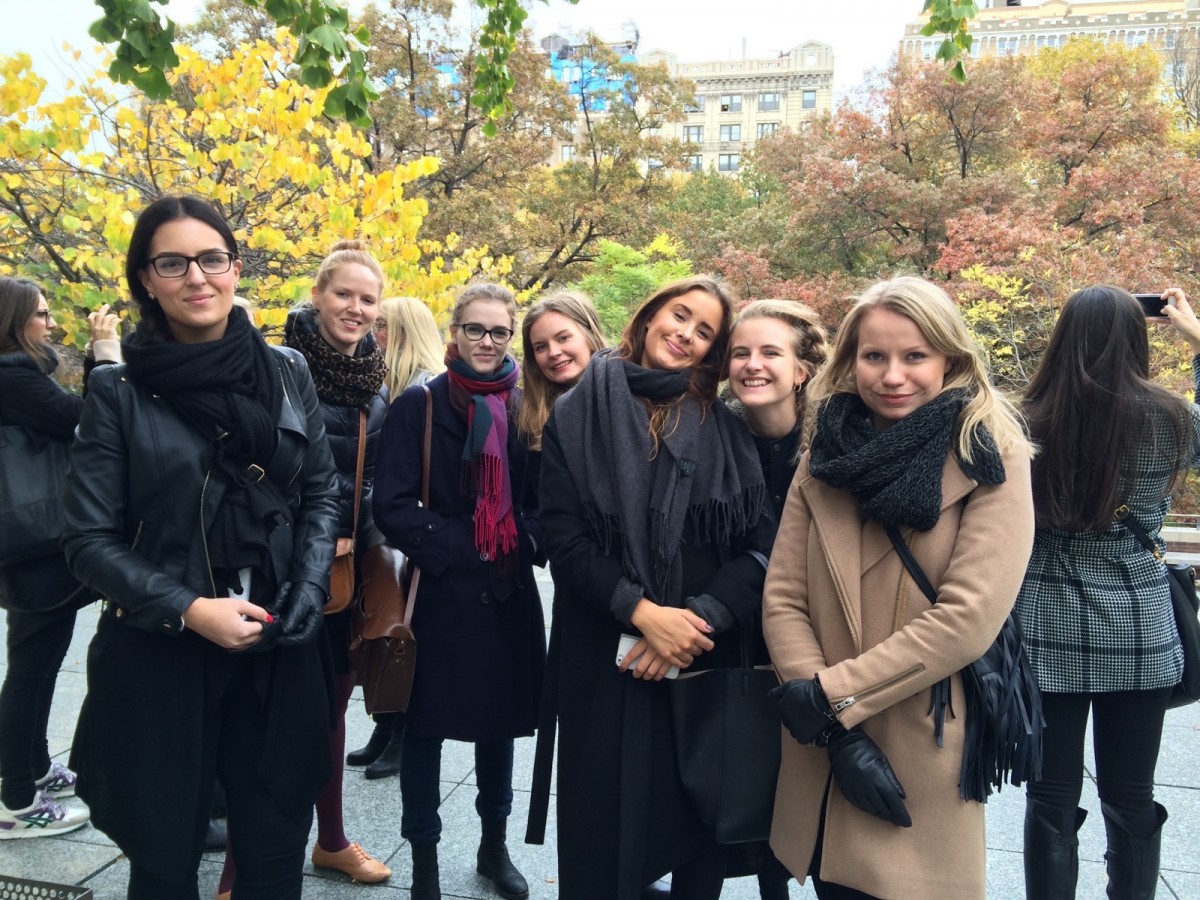
This week Thanks To Scandinavia welcomes a delegation of 15 Scandinavian journalism students, who have traveled to New York for a six day seminar that focuses on American journalism and politics, as well as multi-culturalism. As they learn more about American journalism, former board member explores these same topics in the below interview with Liv Grimsby, a current TTS board member.

Samuel Rachlin, 2012

Samuel Rachlin is a Danish journalist and writer based in Washington DC. He was the first news anchor for TV2 Denmark and became the Washington bureau Chief for TV2 Denmark when he opened the bureau in 1990.  From 1977 to 1984 he was the Moscow correspondent for DR, the Danish  Broadcasting Corporation. He joined the World Bank as a spokesman and media advisor in 1995, and went back to journalism in 1998 as Moscow correspondent for TV2. He now writes for Danish and international publications. His latest book, Me and Stalin, a collection of essays was published in Danish last fall. He is a graduate of the University of Copenhagen and Columbia University’s Graduate School of Journalism. In 1985, he was a Nieman Fellow at Harvard University.


The new social media redefined – what are the challenges?

If you look at the IPO of Face book (a concept developed by college kids about 8-9 years ago) with an evaluation of a $100 billion dollars, we realize the extent of the financial and economic ramifications of the new social media. Face book is now becoming one of the biggest companies in the country. Read more

Next Page »